Neopets: Tales of Dacardia
- 3.2
- Rating
- 10.00K
- Installs
- Free
- Price

 Analysis by App-foxy
Neopets: Tales of Dacardia is the kind of adventure game I would suggest to someone who enjoys rebuilding a place at a relaxed pace rather than chasing constant action. I spent time with it as a light, story-led experience centered on restoring Dacardia after a strange storm, and its strongest quality is the clear sense of purpose behind that setting. You are not simply moving from one unrelated task to another; the game gives your actions a visible connection to the recovery of a damaged community.
That premise makes the opening easy to understand. The first goals are approachable, and I never felt lost about the general reason for completing them. At the same time, this is not an adventure built around rapid combat or demanding reflexes. Its appeal comes from gradual progress, checking what needs attention, and deciding which available objective deserves your time next. If you want a calm mobile game with a recognizable Neopets atmosphere, it has a reasonable chance of fitting your routine.
How the rebuilding loop feels in everyday play
The central idea works best when I treat each short session as a small contribution to Dacardia. I might open the game with only a few minutes available, look over the current objectives, and choose one that feels manageable. That makes it suitable for a lunch break, a quiet commute with a stable connection, or an evening wind-down when I do not want a game demanding complete concentration.
You May Also Like

 Pandora - Music & Podcasts
Pandora’s Music Is Easy to Start, but Harder to Recover
Pandora’s strength is its low-effort path from a seed to a station. Its weak spot is how much confidence it asks you to place in connection, setup, and quiet recovery.

 AccuWeather: Weather Radar
AccuWeather Review: A Quick, Clear Forecast for Everyday Decisions
For everyday plans, the best forecast is the one you can understand quickly. AccuWeather makes rain timing, radar, and local conditions easy to act on, with a few trade-offs.

 Hill Climb Racing
Why Hill Climb Racing Still Turns Crashes Into One More Run
A tiny car, a bumpy hill and one more upgrade: Hill Climb Racing keeps resurfacing because its simple chaos makes every near-miss feel personal.

 AliExpress - Shopping App
AliExpress Makes Global Shopping Feel Personal, but Shoppers Bear the Risk
AliExpress turns a global marketplace into a pocket-sized discovery engine. Its reach is useful, its shopping loop compelling, and its trade-offs easy to miss.

 Lords Mobile: Kingdom Wars
Lords Mobile Is a Kingdom-Building Routine, Not a Quick Match
A case-by-case verdict on the building, battles, device demands, and social commitments that make Lords Mobile rewarding for some players and exhausting for others.

 PDF Scanner app - TapScanner
TapScanner Makes Paperwork Easier to Capture, Check, and Share
TapScanner makes scanning with a phone feel less like a rescue operation and more like a dependable step in getting work done. Its capture tools are useful, though not flawless.
More From Our News Desk
View All News


What helps is the way the setting gives ordinary progress more meaning. A task is not only a box to tick; it belongs to a broader recovery effort. That connection is important because rebuilding games can otherwise become a collection of chores. Here, the storm-damaged world provides a reason to care about the next step, even when the immediate activity is modest.
I also like that the game does not present itself as a frantic test of skill. The adventure category can cover everything from action-heavy journeys to gentle exploration, and this title sits much closer to the latter end. Players who enjoy observing a world change over time will probably get more from it than players who want constant danger, complicated battles, or a stream of dramatic set pieces.
The developer, World of Neopia, Inc, has clearly aimed the experience at a broad audience. Its content rating is Everyone, which matches the approachable tone I felt while playing. That does not mean every player will find the pacing exciting, but it does make the game easy to consider for younger players and families who prefer a softer adventure setting.
The first goals are clear, but the reward is mostly gradual
Early goals matter a lot in a restoration game. If the opening instructions are vague, the entire premise can feel like maintenance work. In my experience, Dacardia gives enough direction to make the beginning understandable: the storm has created a problem, the community needs attention, and your progress is tied to helping put things back together.
The most useful habit is to read the objective before tapping through the next activity. It is tempting to move quickly because the early steps feel simple, but paying attention helps me understand how individual actions connect to the wider rebuild. That small pause also prevents the game from feeling like an endless sequence of prompts.
One of the less obvious strengths is that the game is easier to enjoy when I set a modest goal for each visit. Instead of expecting a large transformation every time I play, I focus on completing one useful piece of work or advancing one strand of the story. This makes the slower rhythm feel intentional rather than disappointing.
There is a trade-off here. Players who need an immediate burst of variety may find the opening restrained. The game asks for patience before its broader sense of restoration becomes satisfying. I would not recommend judging it after a rushed few minutes if you normally enjoy cozy progression, but I also would not tell an action-game fan to wait for it to suddenly become an action game.
Progress is easiest to appreciate when you look at the world, not only the task list
The clearest progress signal is the changing condition of Dacardia itself. I find that more satisfying than a purely numerical advancement system because it gives the player something contextual to notice. The rebuilding theme works when I remember what the place is supposed to become, not just what the next instruction asks me to do.
For that reason, I recommend taking a moment to observe the setting after completing an objective. Players who rush immediately into the next prompt may miss the emotional payoff of the restoration. This is a simple but meaningful difference from many mobile games, where progress is mostly represented by levels, currencies, or a bar filling up.
The game also benefits from separating short-term satisfaction from long-term motivation. A single task can be completed quickly, while the larger rebuild gives the session a continuing direction. That structure is useful for people who like games that can be played in small pieces without losing their identity between visits.
Still, the progress can feel less powerful if you expect every unlock to produce a major change. The appeal is cumulative. I would describe the pacing as a series of small confirmations that the town is moving forward, rather than a constant parade of spectacular rewards. That is a deliberate strength for patient players and a genuine weakness for anyone who measures enjoyment by immediate novelty.
The challenge is more about attention and patience than reflexes
Neopets: Tales of Dacardia does not strike me as a game designed to punish imperfect timing. Its challenge comes from following the rebuilding process, staying aware of objectives, and accepting that some progress is meant to unfold gradually. That makes it approachable, but it also means players looking for a steep skill curve may find the experience too gentle.
I think the difficulty curve works best when viewed as a test of commitment rather than dexterity. The question is not usually whether I can react quickly enough; it is whether I am willing to keep returning to a developing place and handle its needs in order. This can be relaxing, especially when I want a game that does not turn a tired evening into another source of pressure.
A useful approach is to avoid treating every available goal as equally urgent. I get more enjoyment by choosing the task that seems to support the broader restoration, then checking what has changed before moving on. This creates a personal rhythm and reduces the feeling of simply obeying a queue of instructions.
That advice also reveals the main limitation. If you prefer adventure games with puzzles that demand experimentation, combat that tests execution, or exploration that constantly surprises you, this may feel underpowered. The game’s challenge is tied closely to its calm rebuilding identity, so choosing it means accepting a less intense form of engagement.
What keeps me returning, and where the pacing can lose momentum
The strongest retention pressure is the unfinished state of Dacardia. A damaged place naturally creates curiosity: I want to see what the next stage looks like and how the community develops. That is a healthier reason to return than simply chasing a score, because the setting gives the routine a narrative purpose.
However, gradual restoration can also create a sense of waiting. When the next meaningful change feels distant, the game may struggle to hold players who need frequent surprises. I noticed that the experience is most effective when I use it as a companion game rather than my only mobile game. It works well between more intense sessions, but it may not provide enough urgency for a player seeking a main daily challenge.
The presence of optional purchases is another point worth considering. The game is free to start, while individual in-app purchases range from $0.99 to $79.99. I would approach those options carefully and decide in advance whether I am comfortable spending. The rebuilding loop is easier to judge when I first play at its natural pace instead of assuming that every delay should be solved by buying something.
For families, that price range makes device and account settings worth checking before handing the game to a child. The Everyone rating describes the tone and suitability of the content, but it does not remove the need for sensible purchase controls. I would personally play for a while, see whether the pacing feels rewarding without spending, and only then decide whether an optional purchase adds enough convenience to justify it.
This is one of the more important practical distinctions between the game and a traditional offline adventure. A console or premium mobile title may offer a more predictable progression path after one payment, while Dacardia’s free entry makes it easier to try but requires more awareness around optional spending. Neither approach is automatically better; it depends on whether you value a low-risk trial or a more fixed cost.
Who will enjoy the slower restoration approach
I would recommend it to Neopets fans who want to spend time in a familiar world without needing a competitive format. It also suits players who like gentle management-flavored adventures, visible environmental improvement, and objectives that can be handled in short visits. The storm gives the journey a clear starting problem, while the rebuilding focus keeps the experience more personal than a generic collection of disconnected levels.
It may also work for someone returning to mobile games after a long break. The accessible tone and Everyone content rating make it less intimidating than many adventure games built around combat or complex controls. A parent and child could discuss the restoration goals together, although I would still keep an eye on the purchase settings because free entry and optional items create a different responsibility from a fully paid game.
I would suggest skipping it if your priority is speed. Players who want immediate action, difficult puzzles, competitive rankings, or a deep combat system should look toward another kind of adventure. The same applies if you dislike revisiting a world to make incremental improvements. Dacardia’s identity depends on gradual change, so that rhythm is not a minor detail that disappears later.
Compared with a standard puzzle game, it offers more context and a stronger sense of place, but usually less instant satisfaction from solving one isolated challenge. Compared with an action adventure, it is gentler and less demanding, but also less exciting moment to moment. Compared with a traditional town-building game, its appeal is more closely tied to the Neopets setting and the story of recovery rather than pure optimization.
Device expectations and the version I reviewed
The game was released on February 2, 2024, and the current version is 1.14.6. It requires Android 10 or later, so anyone using an older Android device should check compatibility before planning to play. That requirement is not especially demanding for newer phones, but it can matter on an aging handset that still handles lighter games comfortably.
Its reach is still relatively modest, with over ten thousand installs and an average rating of 3.2 from around one thousand ratings. I read that combination as a reason to approach it with curiosity rather than assuming universal approval. The rating suggests that the calm rebuilding formula will not work equally well for everyone, while the install total indicates a smaller audience than the biggest mobile adventure releases.
There are also 348 written reviews, which gives prospective players useful evidence that reactions are mixed rather than uniformly enthusiastic. I would pay attention to recurring comments about pacing and progression before committing a lot of time. A game can be well suited to one player’s preferred rhythm and still feel slow or limited to another.
Because the experience is built around returning to a developing world, I would also make sure my device has enough battery and a dependable connection during play. I am not treating it as a game for a long offline trip unless I have already tested how it behaves in that situation. For short everyday sessions, the more important question is whether the game feels comfortable on your phone and whether its gradual rewards match your available attention.
My verdict on goals, unlocks, and long-term pacing
The progression succeeds when I want a calm adventure with a concrete emotional direction. Rebuilding Dacardia gives the game a stronger backbone than a series of unrelated activities, and the visible improvement of the setting provides a useful progress signal. The early goals are accessible, the challenge stays friendly, and the overall rhythm encourages short, repeat visits.
Its weaknesses come from the same design choices. The gentle difficulty may feel too light, the gradual unlock rhythm may not satisfy players who need constant novelty, and optional purchases mean I would approach the free format with a budget in mind. None of those issues automatically disqualifies the game, but they make the audience narrower than the Neopets name alone might suggest.
My practical recommendation is to treat it as a patient, low-pressure rebuilding adventure. Give it enough time to show how its small goals accumulate, but do not expect it to replace a fast action game or a demanding strategy title. If you enjoy checking in, completing a manageable objective, and seeing a storm-damaged community recover step by step, Neopets: Tales of Dacardia is worth trying because it offers a distinct kind of mobile adventure rather than imitating the loudest games in the category.
For me, the final decision comes down to pacing. I would keep it installed as a relaxed companion game, especially when I want a softer Neopets experience and a reason to return without competing against other players. If your ideal session ends with a dramatic victory every time, choose something more intense. If a small improvement to Dacardia feels like a satisfying accomplishment, this free adventure has a thoughtful, if deliberately unhurried, progression loop.
Bottom line: World of Neopia, Inc has made a welcoming rebuilding game with a clear setting, accessible goals, and a progression structure that rewards patience. Its 3.2 average rating reflects the central trade-off: the same slow, gentle rhythm that makes it comfortable for some players can make it feel underwhelming for others. I recommend trying it without rushing toward purchases, then deciding whether Dacardia’s gradual recovery is the kind of journey you want to continue.
FAQs for Neopets: Tales of Dacardia
01What is Neopets: Tales of Dacardia?
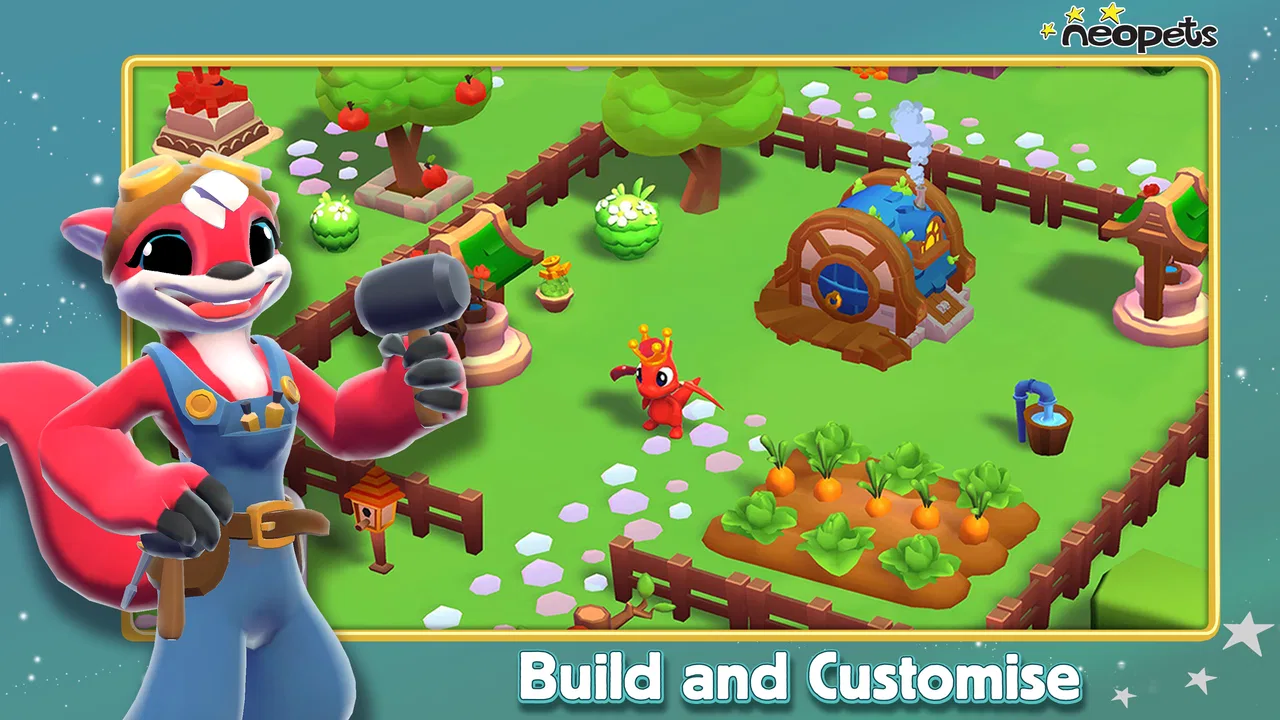
Neopets: Tales of Dacardia is a mobile city-building and adventure game set in the Neopets universe. You take the role of a city planner helping rebuild Dacardia after a devastating storm. The game combines resource management, decorating, exploration, character interactions, and story-driven quests, making it more focused on relaxed progression and discovery than fast-paced action.
02Is Neopets: Tales of Dacardia free to download and play?
The game can generally be downloaded for free, but players should expect optional in-app purchases. These may include premium currency, cosmetic items, convenience features, or other content that can speed up progress. During testing, the core rebuilding and exploration systems were accessible without paying, although free players may need more patience when waiting for timers, collecting resources, or unlocking certain extras.
03Does the game require an internet connection?
An internet connection is recommended, and some features may require you to be online. Online access can be necessary for loading your account, synchronizing progress, receiving updates, accessing events, and processing purchases. While certain parts may appear playable temporarily without a connection, you should not assume that the entire experience works offline, especially if you want reliable progress synchronization across devices.
04Is Neopets: Tales of Dacardia suitable for children?
Neopets: Tales of Dacardia has a colorful presentation, friendly characters, and generally gentle gameplay that may appeal to younger players and families. However, parents should review the available age rating and device settings before downloading it. Because the game may include advertisements, account features, social elements, or optional purchases depending on the platform and region, parental controls are advisable for younger users.
05What devices are compatible with Neopets: Tales of Dacardia?
Compatibility depends on the operating system, device model, and the version available in your region. The game is designed for modern Android and iOS devices, but older phones or tablets may experience installation restrictions, slower loading, reduced performance, or limited storage space. Before downloading, check the official store listing for the latest operating-system requirements and make sure your device has enough free space for updates.
Pros
- Charming Neopets artwork gives the town-building experience plenty of personality.
- Relaxed gameplay suits short sessions without demanding constant attention.
- Decorating options let you personalize Dacardia to match your preferred style.
- Familiar Neopets themes make it appealing to longtime fans of the franchise.
- Regular tasks provide a clear sense of progress as the settlement develops.
Cons
- Some building and upgrade timers can slow progress between play sessions.
- The interface may feel crowded on smaller phone screens.
- Certain resources can become difficult to collect without careful planning.
- The story moves at a slower pace than many action-focused mobile games.
- Performance may vary on older devices
- especially in larger developed areas.

Neopets: Tales of Dacardia
Gallery